Five detailers turn your drawings into a model where every member has a mark, every bolt has a count and nothing collides. No plate is cut until that model is signed off.
Most site problems were drawn on paper and settled on site. Here they are settled on screen, while the answer still costs an hour.
The setting-out drawing reaches site first, so foundations can be cast while the steel is still plate. Get this one wrong and nothing above it fits — no amount of site skill fixes a bolt cast in the wrong place.
Every plate, bolt and weld drawn at the joint it belongs to. Bolt lengths are counted per connection, not estimated per tonne, so the bag that arrives at the column is the bag that column needs.
Crane envelope, door swing, duct run, sprinkler main, the space a forklift mast needs. Found in the model they cost an hour. Found on site they cost a week and a reputation.
Each member gets one number that follows it from the saw to the bundle, into the container and out to the hole it goes in. Packing list, shipping list and erection drawing all use that same number.
Drawings numbered in the order the crew lifts, with temporary bracing shown at the stage it is needed. On a site with one crane, sequence is the schedule — and the sequence is decided here, not in a phone call at 7 a.m.
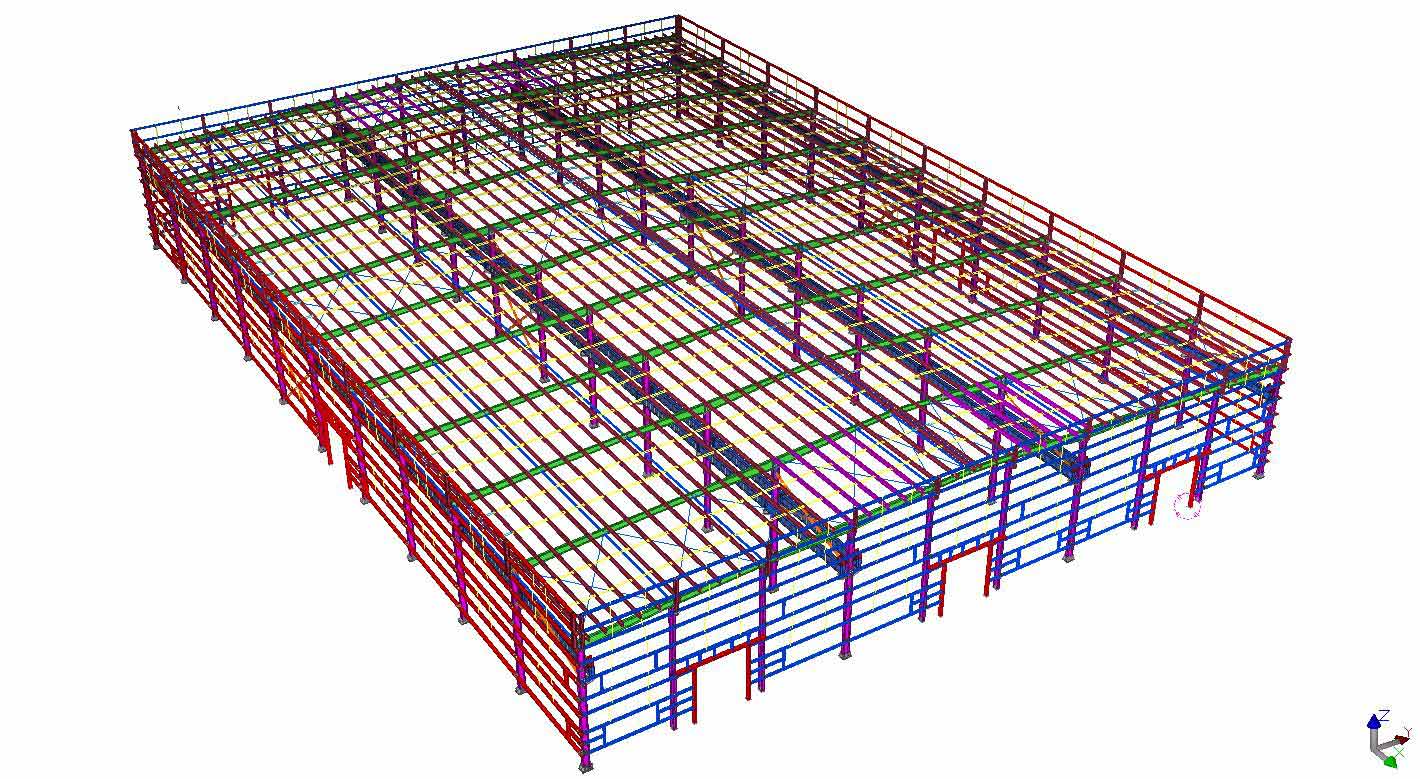
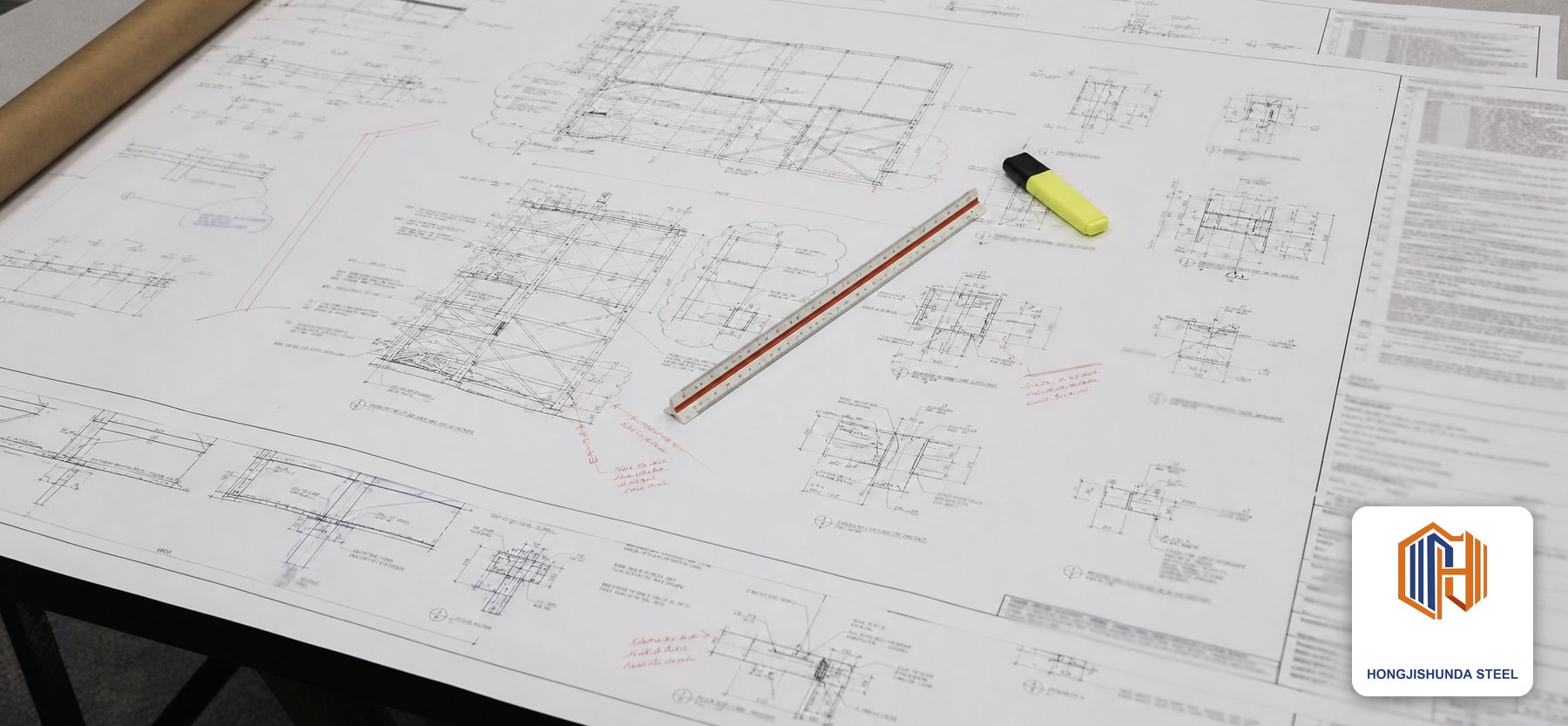
Detailing is invisible in a photograph. It shows up as a crew that keeps working instead of waiting for a call.
Holes are punched and drilled in the yard, finished and painted there. A site drill is a rust point and a lost afternoon, every time.
Bags labelled by connection. A crew that is not sorting bolts is a crew that is lifting steel.
Anchor drawings released early let the civil work run in parallel, instead of waiting for the first container to find out where the bolts go.
Moving a door in the model is a phone call. Moving it after fabrication is a cutting disc, a repaint and a new delivery date.
The model can go to your engineer, your erector, your insurer or your fit-out contractor before a single plate is cut. Everybody argues about the same building.
One model, one revision list. When the client asks what changed since last month, the answer is a document rather than a memory.
A PDF, a DWG or a photograph of a sketch is enough to start. Detailers here read drawings before they read purchase orders.
Send drawings HONGJI SHUNDA